News detail
Why Factory FAT Testing (Factory Acceptance Test) Is Critical Before Shipping Amusement Rides
When amusement rides are exported overseas, every mistake discovered after delivery becomes expensive — delayed installation, unexpected repairs, higher labor costs, and sometimes even re-manufacturing. This is why Factory Acceptance Testing (FAT) is considered one of the most important checkpoints before a ride leaves the manufacturer’s facility.
A proper FAT verifies not just basic operation, but also structural safety, electrical stability, control system response and long-term reliability. For park owners, it is the most effective way to eliminate risks before the ride is shipped across the world.
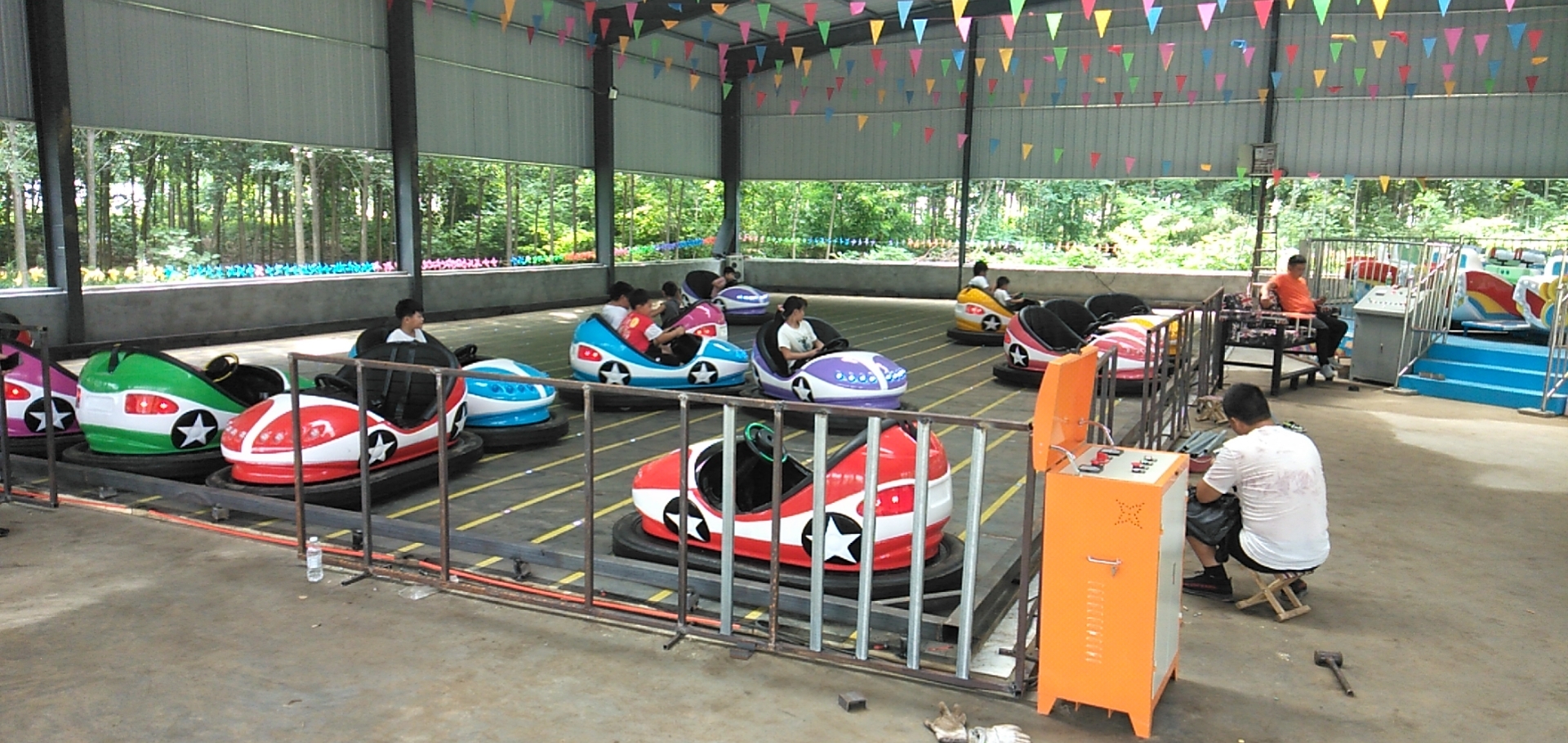
1. What FAT Testing Actually Covers
Many park investors think FAT only checks whether the ride can operate. In reality, FAT is a full engineering-level inspection that ensures the ride meets agreed technical specifications, safety standards and performance requirements.
Here is a simplified breakdown of common FAT items:
FAT Test Scope Overview
| Test Category | What It Evaluates | Why It Matters |
|---|---|---|
| Structural Integrity Check | Steel quality, welding quality, load-bearing capacity | Confirms long-term mechanical strength and prevents structural fatigue |
| Electrical System Test | Wiring, control panels, insulation resistance, grounding | Reduces electrical failure risk after installation |
| Control System Simulation | PLC logic, emergency stop, sensor response, fail-safe mode | Ensures the ride responds safely to unexpected conditions |
| Mechanical System Test | Motors, bearings, transmission, braking | Predicts real-world wear and identifies weak components early |
| Safety Device Verification | Restraints, seatbelts, limit switches, overspeed protection | Ensures compliance with EN13814, ASTM F2291 or local codes |
| Noise & Vibration Test | Running smoothness, abnormal sound | Helps avoid customer complaints and early maintenance issues |
By addressing these elements before shipment, park owners avoid on-site troubleshooting — which is far more complex and costly.
2. FAT Helps You Catch Hidden Problems Before They Travel Overseas
Even the most experienced manufacturers can have minor production deviations. FAT is the phase where these issues are discovered and corrected. Typical issues found during FAT include:
-
Slight misalignment in mechanical transmission
-
Control program timing errors
-
Abnormal vibration under full load
-
Slow response time in emergency braking
-
Sensor not triggering consistently
-
Variations in voltage tolerance
Correcting these at the factory can be done in hours or days. Correcting them after installation in another country may take weeks.
3. FAT Saves You Money, Time, and Installation Risk
Shipping large amusement equipment is expensive. If the ride arrives with issues, your costs multiply:
-
Additional installation hours
-
Hiring local engineers
-
Ordering replacement parts
-
Re-testing safety systems
-
Delayed opening and revenue loss
FAT reduces these risks dramatically by ensuring the ride arrives ready for installation, not troubleshooting.
Here is a simple comparison:
Cost Comparison: With FAT vs. Without FAT
| Scenario | With FAT | Without FAT |
|---|---|---|
| Structural issue discovered | Repaired immediately at factory | Must disassemble on-site; delays 2–5 weeks |
| Control program bug | Fixed within 1 day | Requires remote debugging or engineer travel |
| Component failure | Replaced instantly | Wait for overseas shipping of spare parts |
| Installation time | Predictable and smooth | Uncertain and prolonged |
| Project risk | Very low | Significantly higher |
FAT essentially functions as your risk shield.
4. What Park Owners Should Check During FAT
Even if park owners cannot attend FAT in person, they should request detailed FAT documentation and video evidence. Key items to confirm include:
-
Full operation cycles at different speeds
-
Emergency stop and restart tests
-
Photos/videos of internal wiring and cabinets
-
Material and welding certificates
-
Load test results
-
PLC program backup and version record
-
Calibration of sensors and limits
-
Noise & vibration measurement data
A reliable supplier will proactively provide these without being asked.
5. FAT Confirms Your Ride Meets International Safety Standards
Most countries require compliance with standards such as:
-
EN13814 (Europe)
-
ASTM F2291 (USA)
-
GB 8408 (China)
-
ISO 17842
During FAT, the manufacturer checks:
-
Structural safety factors
-
Redundancy in safety circuits
-
Overspeed and overcurrent protection
-
Electrical grounding and insulation
-
Seat restraint reliability
This ensures your ride can pass final on-site inspection by local authorities after import.
Conclusion
Factory Acceptance Testing is not just a routine step — it is one of the most important technical protections for amusement park investors. It prevents hidden defects, reduces delays, verifies compliance with global standards and ensures the ride works exactly as promised before leaving the factory.
Skipping FAT means accepting unnecessary risks.
Completing FAT means your project is protected from day one.
Online Message
Please leave the message you want to inquiry. We will reply you as soon as possible within 24 hours.