News detail
Electric or Diesel Trackless Amusement Train Rides?
In the B2B amusement equipment sector, a single wrong decision in the procurement stage can lead to a "site-wide paralysis." This article isn't a sales pitch—it's a technical deep dive designed to help global operators navigate the complex specs of trackless amusement train rides and choose a model that actually makes money.
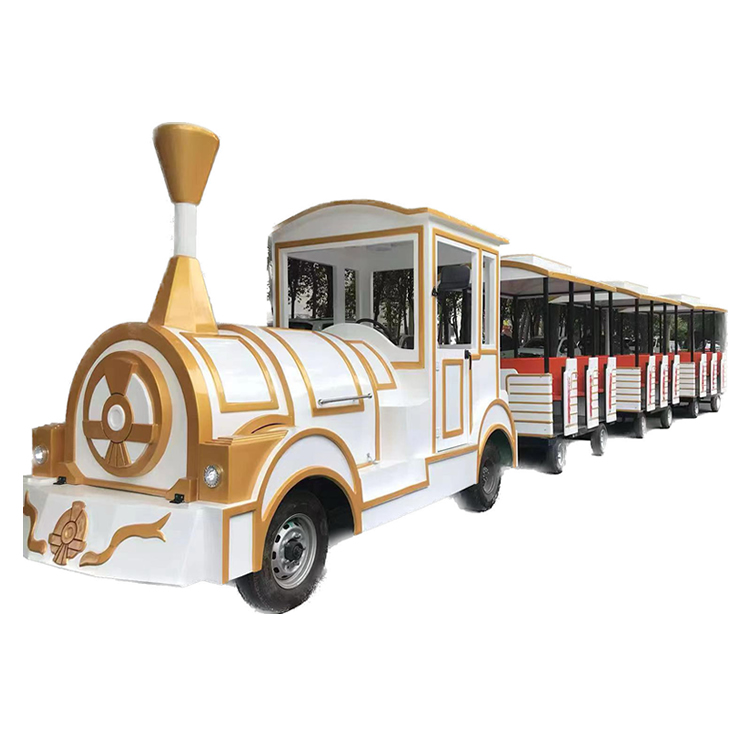
How to Measure Your Site Before Buying Trackless Amusement Train Rides?
The biggest mistake is buying a train before measuring your "bottlenecks." When you integrate trackless amusement train rides into a commercial space, the most critical metric is the Swept Path. This is the total width the train occupies during a turn.
-
Aisle Width: If your mall aisle is 6 meters, don't buy a train with a 5.5-meter turning radius. You need a buffer for pedestrian safety.
-
The Ground Load-Bearing: While trackless amusement rides are lighter than tracked ones, a 4-cabin train full of adults still exerts significant point pressure. Ensure your floor tiles or asphalt can handle a 3,000kg GVW (Gross Vehicle Weight).
Selecting the Right Power: Electric Trackless Amusement Train Rides vs. Diesel Models
The "Electric vs. Diesel" debate isn't about being green; it's about Uptime.
-
Electric Trackless Amusement Train Rides: Best for indoor environments and eco-parks. The key here is the Motor Controller. At MODERN, we use AC asynchronous motors which offer better regenerative braking—meaning the train charges itself slightly while going downhill.
-
Diesel Trackless Amusement Train Rides: If you operate in a park with hills (slopes > 7%), electric power will likely fail or overheat. Diesel-powered amusement trains provide the constant torque required for 10-hour shifts in mountainous terrain without needing a 6-hour recharge halfway through the day.
Passenger Capacity: Maximizing ROI on Your Trackless Amusement Train Rides
How many cabins do you actually need? In the amusement ride industry, more cabins don't always mean more profit.
-
The 14-Seat Sweet Spot: For shopping malls, a locomotive plus two cabins (14-20 seats) is the gold standard. It’s agile and doesn't create "traffic jams."
-
The 40-70 Seat Giants: For large-scale resorts, you need high-capacity trackless amusement train rides. However, for any configuration over 3 cabins, we insist on an Active Articulation System to ensure the last cabin follows the exact path of the locomotive, preventing "fishtailing" in tight corners.
Safety First: The Braking Systems of Trackless Amusement Train Rides
Safety is what keeps your insurance premiums low. When evaluating trackless amusement train rides, look beyond the paint:
-
Air-Over-Hydraulic Brakes: This is a must for heavy-duty models. It ensures that even if the engine or motor stalls, you have enough stored pressure to stop the entire train.
-
The Emergency Disconnect: Every professional trackless amusement ride should have a fail-safe hitch. If a cabin uncouples, the brakes must lock automatically on that specific cabin to prevent it from rolling backward down a slope.
Material Durability: Why FRP is the Industry Standard for Trackless Amusement Train Rides
Why do we use Fiberglass Reinforced Plastic (FRP) instead of sheet metal?
-
Corrosion Resistance: Most sightseeing trains operate outdoors. FRP doesn't rust.
-
Weight Optimization: FRP provides a high strength-to-weight ratio, which extends the battery life of electric trackless amusement train rides.
-
Detailing: You can achieve intricate, vintage "Steam Train" aesthetics with FRP molds that are impossible or too expensive with steel.
Maintenance Checklist: Keeping Your Trackless Amusement Train Rides Profitable
To ensure your amusement equipment lasts 10+ years, you need a proactive maintenance schedule:
-
Daily: Check tire pressure and battery electrolyte levels (for lead-acid models).
-
Weekly: Inspect the hitch pins and lubrication points on the steering knuckles.
-
Monthly: Test the torque on the wheel lugs. Trackless amusement train rides undergo constant lateral stress, and loose bolts are a common but preventable issue.
Price Breakdown: What Should You Pay for Trackless Amusement Train Rides?
Transparency in pricing is rare in the amusement ride export business. Here is what to realistically budget (FOB prices):
-
Eco-Series (Electric, 14-18 seats): $12,500 – $17,000.
-
Professional Scenic Series (Diesel, 40+ seats): $29,000 – $42,000.
-
Custom Themed Rail-Style Trackless Trains: $35,000+. If a quote for trackless amusement train rides seems too low, check the battery brand and the steel gauge of the chassis—those are where low-cost manufacturers cut corners.
Online Message
Please leave the message you want to inquiry. We will reply you as soon as possible within 24 hours.