News detail
Portable Pirate Ship Trailer: What Actually Matters in Real Mobile Ride Operations
When evaluating a Portable Pirate Ship Trailer, most buyers initially focus on visual impact—swing angle, design style, lighting. That’s understandable, especially for attracting attention at events.
But once the ride is used in real mobile operations, priorities shift very quickly.
The real question becomes:
“Can this unit be moved, set up, operated, and packed again without slowing down the entire schedule?”
Because in traveling amusement operations, efficiency is not a bonus—it’s the core requirement.
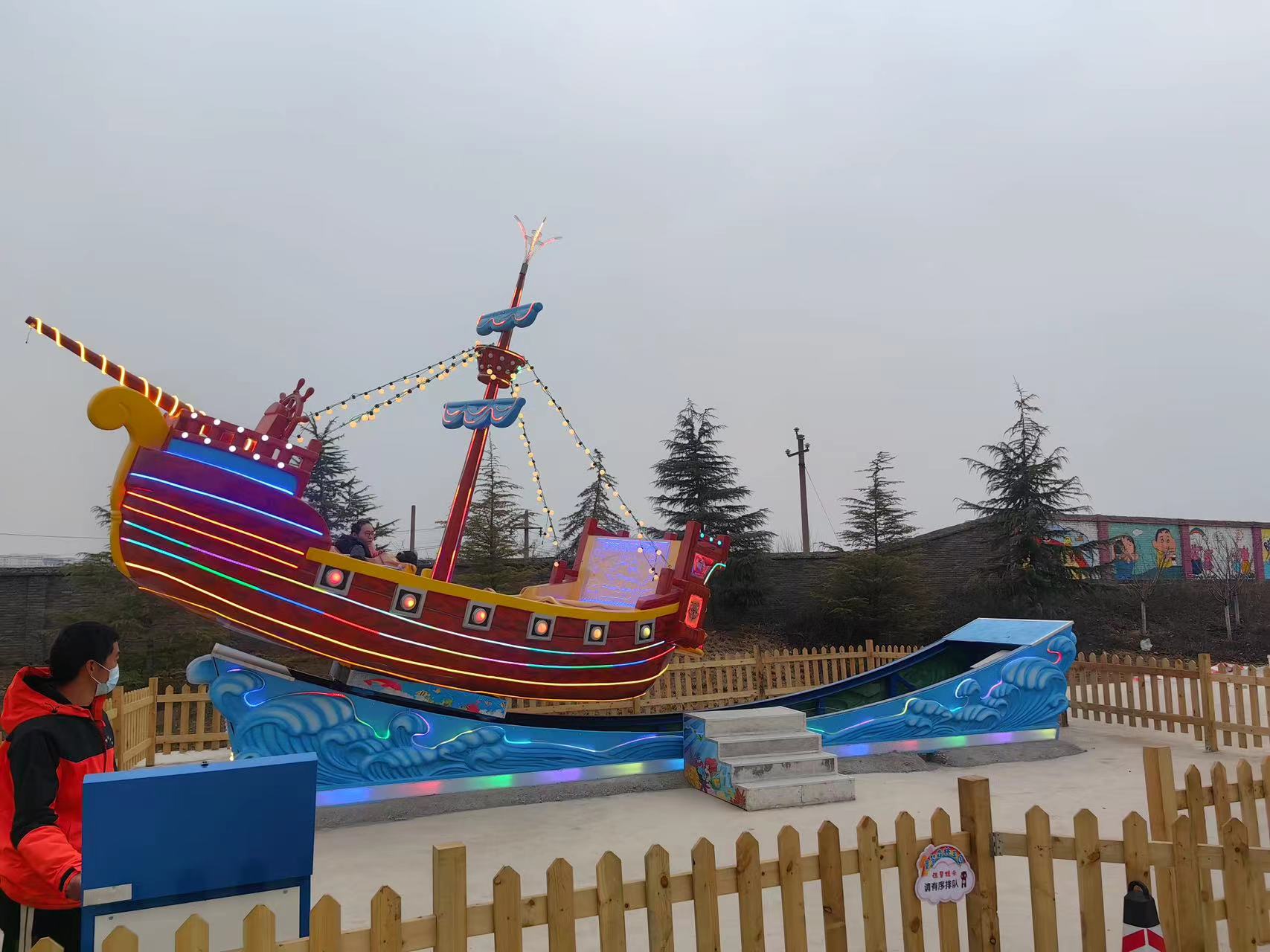
Transport Reality: It’s Not Just About Towing
At first glance, a Portable Pirate Ship Trailer seems straightforward—hook it to a truck and move. In practice, transport conditions are rarely that simple.
Operators often face constraints such as:
- Road regulations on trailer length and axle load
- Limited access to city centers during certain hours
- Tight turning radii in temporary event locations
In one project, the equipment itself met all specifications, but transport had to be rerouted due to local road restrictions. This added several hours to each relocation.
That’s why, before finalizing any Portable Pirate Ship Trailer, experienced manufacturers always look at the actual operating routes—not just the equipment.
Setup Time: Where “Portable” Gets Tested
The term “portable” is widely used, but the real difference appears on-site.
In practical terms, a well-designed Portable Pirate Ship Trailer typically requires:
- Around 2–4 hours for full setup with a trained team
- Longer during initial operations or unfamiliar conditions
The key factors are not obvious from specifications:
- Whether the support legs deploy hydraulically or manually
- How quickly the electrical system can be connected
- How intuitive the safety locking mechanisms are
If these elements are not optimized, setup becomes labor-intensive, and mobility loses its real advantage.
Structural Balance Matters More Than Maximum Swing
Many buyers prioritize swing angle or ride height, which are important for visual appeal.
However, in long-term operation, structural balance has a greater impact.
A typical mid-size pirate ship ride operates within:
- Swing angles of approximately 60° to 75°
- Passenger capacity of around 12 to 24 riders
- Cycle time of about 2–3 minutes per run
If the structure is not properly balanced:
- Startup current increases
- Motion becomes less stable
- Braking position may vary
These issues are rarely visible during short tests but become noticeable after continuous use.
So when designing a Portable Pirate Ship Trailer, experienced engineers focus more on weight distribution and center of gravity than on pushing extreme motion parameters.
Ground Conditions: The Most Underestimated Variable
In mobile operations, the ride itself is consistent—but the ground is not.
Different surfaces create different challenges:
- Asphalt → generally stable
- Compacted soil → may require reinforcement
- Temporary event grounds → often uneven
Without proper ground preparation, slight instability can appear during operation. Over time, this affects both ride performance and structural fatigue.
A reliable Portable Pirate Ship Trailer setup usually includes:
- Adjustable support legs
- Clear leveling range specifications
- Optional ground support solutions
These details are often overlooked during purchasing, but they matter in daily use.
Power Supply: Small Differences, Real Impact
Power conditions vary significantly across locations.
Common setups include:
- Standard three-phase power supply
- Generator-based temporary power
The issue is not availability, but stability.
For example:
- Voltage fluctuation from generators can affect startup
- Long cable runs can reduce effective power delivery
These factors influence ride consistency and can indirectly affect equipment lifespan.
In real projects, power conditions are often confirmed first, and the system is adjusted accordingly for the specific Portable Pirate Ship Trailer configuration.
How MODERN Designs for Real Mobility
At MODERN, portability is treated as a system, not a feature.
Integrated Trailer Structure
The ride and trailer are designed as a unified structure, improving stability during both transport and operation.
Hydraulic Support Systems
Support deployment is simplified to reduce manual work and improve setup efficiency.
Modular Electrical Design
Electrical systems are pre-configured to minimize on-site wiring and reduce setup time.
Transport-Oriented Engineering
Dimensions, weight distribution, and balance are considered from the design stage, not after production.
These factors are not always visible in specifications, but they define long-term usability.
What Experienced Operators Actually Focus On
After running mobile rides for a while, operators stop focusing on appearance and start asking practical questions:
- Can relocation be completed within one working day?
- Is additional lifting equipment required?
- How many people are needed for setup?
These are the factors that determine whether a Portable Pirate Ship Trailer truly supports efficient operation.
Final Insight: Mobility Is About Workflow, Not Just Design
From real project experience, portability is not defined by whether a ride can move—it’s defined by how easily it fits into an operational cycle.
Transport, setup, operation, and dismantling must work together smoothly.
A well-designed Portable Pirate Ship Trailer reduces friction at every stage. When that happens, the ride doesn’t just look mobile—it actually performs like a mobile asset.
Online Message
Please leave the message you want to inquiry. We will reply you as soon as possible within 24 hours.