News detail
Crazy Dance Ride Installation: Real Engineering Steps for Safe Setup
Why Crazy Dance Ride Installation Requires Professional Engineering Planning
The Crazy Dance Ride Installation process is significantly more complex than many small amusement rides because the ride combines multiple rotating mechanical systems operating simultaneously. A typical Crazy Dance ride features a central rotating platform, several radial arms, and independently spinning passenger gondolas.
During operation, these three motion layers create dynamic centrifugal forces. Because of this, a proper Crazy Dance Ride Installation must ensure that the ride structure is correctly anchored, balanced, and aligned before the first test run.
In many amusement parks, installation is completed by a combination of factory engineers and local construction teams. The ride components are usually delivered in modular sections, including the base platform, central drive column, rotating arms, passenger cabins, electrical control cabinets, and decorative panels.
Experienced manufacturers such as MODERN typically provide detailed assembly drawings and on-site installation guidance to ensure the ride meets safety standards and operates smoothly from day one.
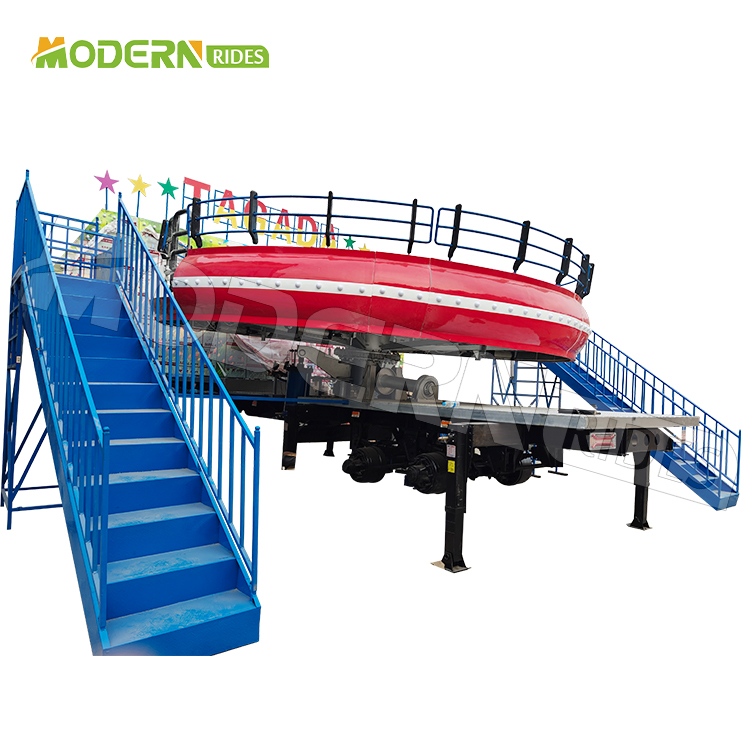
Site Preparation Before Crazy Dance Ride Installation
Ground Foundation Requirements
Before starting the Crazy Dance Ride Installation, the most important preparation step is the concrete foundation.
Because the ride generates strong rotational forces, the ground must support both static load and dynamic load. In most installations, the reinforced concrete foundation is designed with embedded anchor bolts that match the ride’s base plate.
Typical preparation requirements include:
-
reinforced concrete slab with steel rebar
-
precise anchor bolt positioning
-
flatness tolerance within a few millimeters
-
proper drainage around the ride area
In permanent amusement parks, foundations are usually prepared at least 10–15 days before equipment delivery so that the concrete can fully cure.
Transportation and Component Delivery
A standard Crazy Dance ride is transported in several containers or trucks depending on ride size. Key structural components delivered to the site include:
-
central rotating platform
-
radial arms and support frames
-
passenger gondolas
-
drive motors and gearboxes
-
electrical control systems
During Crazy Dance Ride Installation, each component is inspected for shipping damage before assembly begins.
Manufacturers like MODERN normally mark each structural component with installation codes so engineers can quickly identify the correct assembly sequence.
Step-by-Step Crazy Dance Ride Installation Process
Step 1: Base Platform Assembly
The installation begins by positioning the main platform structure on the prepared foundation. The base frame is carefully aligned with the anchor bolts and leveled using precision measurement tools.
After alignment, technicians tighten the high-strength bolts and verify that the platform remains perfectly horizontal.
Correct leveling is essential because even small deviations can affect rotation balance during operation.
Step 2: Central Drive System Installation
The next stage of Crazy Dance Ride Installation is mounting the central drive system.
This system includes:
-
main electric motor
-
reduction gearbox
-
rotating shaft assembly
The drive system controls the primary rotation of the platform. Engineers must carefully align the gearbox and motor to ensure smooth torque transmission and prevent vibration.
Step 3: Mechanical Arm Assembly
After the central system is secured, technicians install the rotating arms that extend from the platform.
Each arm carries one or more spinning gondolas. During Crazy Dance Ride Installation, these arms are mounted using reinforced pivot joints designed to withstand continuous motion cycles.
Precision alignment ensures that each arm rotates freely without abnormal friction.
Step 4: Passenger Gondola Installation
The gondolas are the passenger seating units attached to the outer ends of the rotating arms.
Each gondola typically includes:
-
safety restraint bars
-
reinforced seat frames
-
shock-absorbing suspension systems
During Crazy Dance Ride Installation, technicians check every connection point to ensure the gondola rotates smoothly while maintaining passenger stability.
Electrical System Setup and Testing
Control Cabinet Installation
Once the mechanical structure is assembled, the electrical installation begins.
The control cabinet is mounted near the ride platform and connected to the main power supply. Modern systems use frequency converters to regulate ride speed and motion patterns.
A properly configured control system allows operators to manage ride intensity safely.
Safety Sensor Calibration
Part of the Crazy Dance Ride Installation process involves testing all safety sensors and emergency stop circuits.
Engineers check:
-
emergency stop buttons
-
overload protection systems
-
rotation speed sensors
-
electrical grounding systems
Only after all safety systems pass inspection can the ride proceed to operational testing.
Test Operation and Commissioning
Before the ride is opened to the public, engineers perform multiple test cycles without passengers.
These tests verify:
-
smooth rotation
-
balanced arm movement
-
stable gondola motion
-
proper braking performance
During this stage of Crazy Dance Ride Installation, technicians also fine-tune the ride’s motion programming to ensure the experience is thrilling but controlled.
Manufacturers such as MODERN normally supervise this stage carefully because correct commissioning significantly affects long-term equipment performance.
Factory Manufacturing Details That Affect Installation Quality
The efficiency of Crazy Dance Ride Installation depends heavily on manufacturing precision.
High-quality ride factories pay special attention to:
-
CNC-machined structural components
-
precision welding of load-bearing frames
-
pre-assembled electrical systems
-
factory rotation testing before shipment
At MODERN, ride structures are typically pre-assembled and tested in the factory workshop before shipping. This approach ensures that all rotating mechanisms operate correctly, making on-site installation faster and more reliable.
FAQ About Crazy Dance Ride Installation
How long does a typical installation take?
A complete Crazy Dance Ride Installation usually requires about 5–10 working days depending on ride size, site preparation, and local labor conditions.
What type of foundation is required?
Most installations require a reinforced concrete slab designed to support the dynamic loads generated by the rotating ride structure.
Can the ride be relocated after installation?
Yes. Many Crazy Dance rides are designed with modular structures that allow them to be disassembled and relocated if needed.
How many technicians are needed for installation?
A professional installation team normally includes 4–6 technicians plus an electrical engineer responsible for control system configuration.
How should operators maintain the ride after installation?
After completing Crazy Dance Ride Installation, long-term safety depends on consistent maintenance and operational discipline. Operators should perform daily inspections before opening the ride to visitors. These checks usually include verifying that all mechanical bolts remain properly tightened, inspecting rotating joints for abnormal wear, and ensuring the safety restraints on each passenger gondola function correctly.
Lubrication is another critical maintenance step. Because the ride contains multiple rotating components—such as arm pivots, bearing housings, and central drive shafts—proper lubrication reduces friction and prevents premature mechanical wear. Technicians should follow the lubrication schedule provided by the manufacturer and use recommended industrial-grade grease.
Electrical components should also be inspected regularly. Control cabinets must remain dry and properly ventilated, while emergency stop systems should be tested frequently to confirm immediate response during unexpected situations.
Another key part of maintenance involves monitoring ride vibration and noise levels. Sudden changes in vibration or unusual mechanical sounds often indicate early mechanical problems. Addressing these issues quickly can prevent costly downtime.
Professional ride manufacturers such as MODERN typically provide detailed maintenance manuals and technical support to help operators maintain equipment reliability. By following structured maintenance routines and performing scheduled inspections, amusement parks can ensure that the ride continues operating safely and efficiently for many years.
Online Message
Please leave the message you want to inquiry. We will reply you as soon as possible within 24 hours.