News detail
Complete Technical Guide for Giant Pendulum Rides
In many amusement projects, Pendulum Rides are introduced early—often during the concept phase—because they look impressive on master plans and marketing visuals. A tall structure, wide swing arc, and visible motion naturally attract attention.
What is often underestimated is that Pendulum Rides are not simple attractions. They are high-cycle mechanical systems operating under constant alternating loads. The difference between a profitable asset and a long-term liability is rarely visible on opening day.
This article focuses on how Pendulum Rides actually behave after years of operation—and what experienced developers pay attention to before signing a purchase contract.
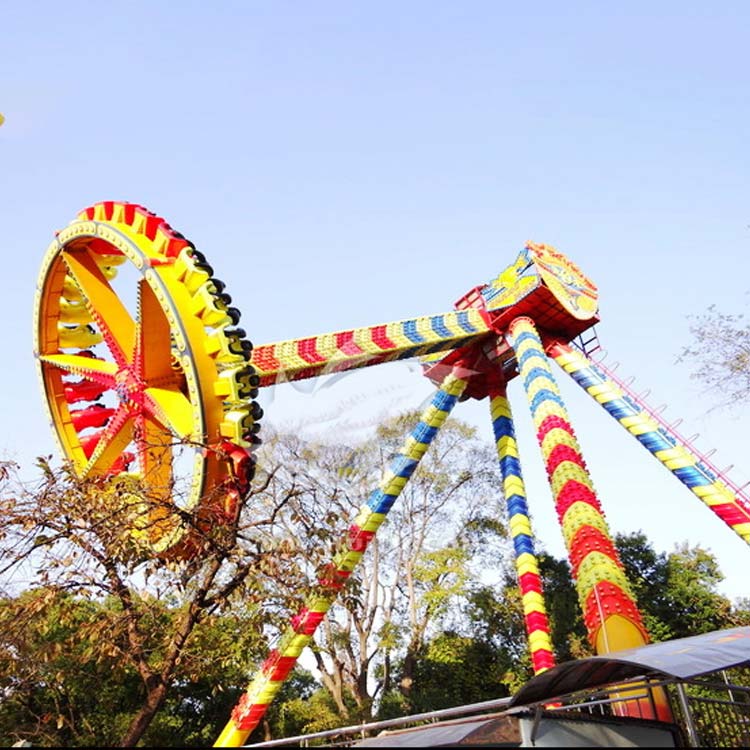
How Centrifugal Force Really Affects Pendulum Rides Over Time
From a physics perspective, the core experience of Pendulum Rides comes from centrifugal force generated during swing and rotation. On paper, increasing swing angle and rotational speed looks like an easy way to boost thrill value.
In real projects, however, excessive angular velocity often becomes a maintenance problem rather than a competitive advantage.
We have seen installations where peak forces were pushed too aggressively. The result was not higher guest satisfaction, but faster bearing wear, increased noise levels, and more frequent alignment adjustments. Over time, these issues reduce operational uptime.
Experienced manufacturers tune Pendulum Ride motion curves conservatively. Smooth force transitions matter more than peak numbers. Riders still feel excitement, but structural components experience far less cumulative stress.
Structural Fatigue: The Cost Factor Most Buyers Don’t Calculate in Giant Pendulum Rides
Unlike static steel structures, Giant Pendulum Rides live in a constant state of stress reversal. Every swing introduces tension, compression, and torsion into the same components—thousands of times per day.
Fatigue damage does not announce itself early. In many refurbishment cases, cracks are discovered only after abnormal vibration or noise appears.
The most common fatigue zones are predictable:
-
Main axle shoulders
-
Swing arm root connections
-
Gondola support brackets
None of these failures are sudden accidents. They are cumulative results of material choice, welding quality, and long-term load management.
This is why serious manufacturers specify fatigue-tested steel grades and controlled heat treatment, not just nominal strength values listed on datasheets.
Why NDT Testing Is a Financial Tool, Not Just a Safety Requirement for Pendulum Rides
Many operators treat NDT testing as a regulatory obligation. In practice, it functions more like insurance against unplanned downtime.
Annual magnetic particle and ultrasonic inspections regularly uncover micro-cracks long before visible deformation occurs. When addressed early, repairs are localized and relatively inexpensive.
When ignored, the same defects can escalate into extended shutdowns, structural reinforcements, or complete component replacement.
From a financial standpoint, predictable inspection costs are always lower than emergency repair scenarios.
Drive System Decisions That Shape the Long-Term ROI of Pendulum Rides
The choice between hydraulic and electric drive systems often starts with torque output comparisons. That approach misses the bigger picture.
Hydraulic systems deliver strong motion but introduce variables that become harder to control over time—fluid leakage, contamination, temperature sensitivity, and maintenance skill dependency.
Electric drive systems, especially those paired with modern VFDs, offer more predictable behavior. Soft-start curves reduce mechanical shock, while precise speed control improves ride smoothness.
Across multiple operating cycles, electric-driven Pendulum Rides consistently show lower maintenance volatility and more stable operating costs.
Passenger Throughput Is an Engineering Problem, Not Just an Operations Issue
Throughput optimization in Pendulum Rides is often discussed as a staffing or operational topic. In reality, it starts with mechanical design.
Small reductions in platform alignment time, gate synchronization, and restraint verification can significantly increase hourly capacity without raising stress levels.
Oversized gondolas may look impressive, but they place higher demands on motors, brakes, and structural components. In many cases, a slightly smaller capacity achieves better ROI through higher reliability and shorter cycle times.
Climate and Environment: Why Pendulum Rides Behave Differently by Location
Environmental conditions directly affect the lifespan of Pendulum Rides.
In coastal regions, corrosion—not fatigue—is often the dominant risk. Installations without proper ISO 12944 C5-M coating systems show accelerated material degradation within a few years.
High-wind regions require automated monitoring. Integrated anemometers that trigger controlled shutdowns are not optional extras; they are basic risk mitigation tools.
In extreme temperature zones, bearing tolerances and lubrication strategies must account for thermal expansion to prevent premature wear.
Factory Audits: What Experienced Buyers Look for When Sourcing Pendulum Rides
A factory visit quickly separates manufacturers from assemblers.
Reliable suppliers maintain:
-
Documented weld maps
-
Certified welder records
-
Traceable component sourcing
-
Recorded load-testing procedures
These are not marketing materials. They are indicators of whether a supplier understands long-term operational responsibility.
For buyers, factory audits reduce uncertainty far more effectively than price negotiations.
Why ASTM F24 Compliance Matters Beyond Certification for Pendulum Rides
ASTM F24 standards are often viewed as paperwork hurdles. In reality, they define operational boundaries that protect both operators and investors.
Dynamic envelope analysis prevents clearance conflicts. Redundant fail-safe logic ensures predictable shutdown behavior. Together, these requirements reduce liability exposure and simplify insurance negotiations.
Compliance is not about passing inspections—it is about controlling risk.
Final Perspective: Treating Pendulum Rides as Long-Term Assets
Well-designed Pendulum Rides are more than thrill machines. They are long-term mechanical assets with predictable cost curves—if engineered and sourced correctly.
Projects that prioritize structural discipline, conservative motion design, and transparent manufacturing practices consistently achieve shorter payback periods and fewer operational surprises.
The difference rarely lies in appearance. It lies in engineering decisions made long before installation.
Online Message
Please leave the message you want to inquiry. We will reply you as soon as possible within 24 hours.