News detail
Carousel Ride Site Requirements: A Practical Planning Guide for Amusement Parks
When planning a new amusement attraction, understanding Carousel Ride Site Requirements is one of the first technical steps operators must evaluate. A carousel may appear visually simple, but its installation involves careful planning of space allocation, structural load capacity, electrical infrastructure, and visitor flow management.
For amusement park investors, ignoring Carousel Ride Site Requirements can lead to costly redesigns, inefficient queue layouts, or even regulatory compliance issues. A well-planned carousel installation ensures smooth operation, optimal visitor circulation, and long-term equipment stability.
In most cases, a commercial carousel requires more than just the ride’s diameter. The full operational footprint includes safety clearance zones, boarding platforms, operator control areas, and maintenance access corridors. For example, mid-size carousels commonly range from 9–15 meters in diameter, with additional perimeter clearance needed for safe operation and visitor movement.
This guide explains the real engineering considerations behind Carousel Ride Site Requirements, helping amusement park operators plan installations correctly from the start.
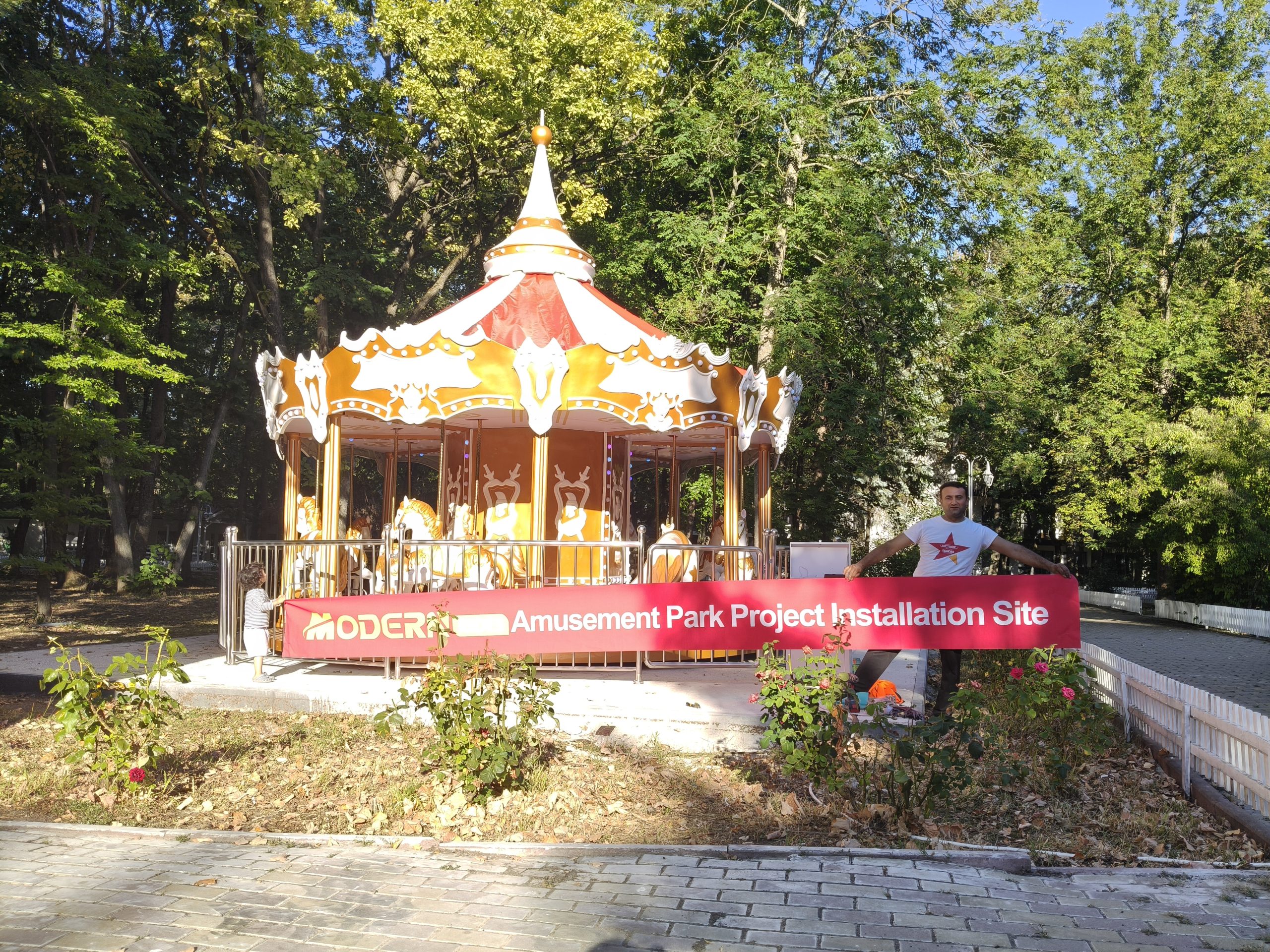
Understanding the Core Carousel Ride Site Requirements
Before installing a carousel ride, operators must evaluate several fundamental conditions that determine whether the location is suitable.
Space and Footprint Planning
The most obvious component of Carousel Ride Site Requirements is physical space.
A standard commercial carousel typically requires:
-
Ride platform diameter: 6–15 meters depending on capacity
-
Safety clearance zone: 1–2 meters around the perimeter
-
Queue and boarding area: 3–6 meters additional space
-
Operator control station: visibility to the entire ride
For example, a 16-seat carousel may require a total installation diameter of 7–9 meters, while larger theme-park models may exceed 15 meters including safety clearance zones.
In professional amusement park design, engineers often add extra circulation space to avoid crowd congestion during peak visitor hours.
Ground Structure and Foundation Requirements
Another critical aspect of Carousel Ride Site Requirements is the structural condition of the installation surface.
Carousel rides generate dynamic loads due to rotational motion and passenger weight distribution. Therefore, the installation ground must meet specific structural criteria.
Level and Stable Surface
The ground surface must be:
-
Perfectly level
-
Free from structural cracks
-
Capable of supporting rotational loads
Most manufacturers recommend reinforced concrete flooring as the standard installation surface.
Load Bearing Capacity
Commercial carousel rides typically require a floor load capacity between:
-
200 kg/m² for small models
-
300 kg/m² or higher for large models
This ensures the ground structure can support the ride’s central column, drive motor system, and passenger weight.
Foundation Requirements
Some smaller carousel rides may not require deep foundations and can be installed directly on reinforced concrete floors using anchor bolts.
However, larger installations such as double-deck carousels generally require engineered foundations to support their increased structural height and weight.
Electrical Infrastructure for Carousel Installation
Electrical planning is another key factor in Carousel Ride Site Requirements.
Most commercial carousel rides operate on industrial electrical systems rather than standard building outlets.
Typical electrical specifications include:
-
Three-phase power supply
-
380V or equivalent regional voltage
-
Power consumption between 5–20 kW depending on size
Proper electrical planning must include:
-
Dedicated circuit protection
-
Emergency power cutoff
-
Stable voltage supply
-
Weather-protected electrical cabinets
Incorrect electrical planning can cause motor overheating or frequent system shutdowns.
Passenger Flow and Queue Layout Design
One often overlooked element of Carousel Ride Site Requirements is visitor movement.
A carousel typically attracts families with children, which means the ride entrance must be designed to accommodate strollers, waiting lines, and easy boarding access.
Key design considerations include:
-
Clearly separated entry and exit paths
-
Adequate queue area to prevent congestion
-
Operator visibility across the boarding platform
-
Accessibility for wheelchair users
International accessibility guidelines also require loading areas to include adequate maneuvering space for wheelchair users when applicable.
This planning improves both safety and visitor satisfaction.
Why Park Operators Choose MODERN Carousel Solutions
For operators evaluating Carousel Ride Site Requirements, equipment design also plays an important role in simplifying installation and long-term operation.
MODERN carousel rides are engineered specifically for commercial amusement environments where installation efficiency and durability matter.
Precision Structural Engineering
MODERN carousel platforms are designed with reinforced central columns and balanced drive systems to ensure smooth rotation and stable long-term operation.
Flexible Installation Options
Depending on project conditions, MODERN offers both foundation-based and foundation-optional carousel designs, allowing parks to adapt to different site conditions.
Optimized Power Efficiency
Through efficient motor systems and modern control technology, MODERN carousel rides maintain stable operation while reducing energy consumption during daily operation.
Custom Theme Integration
Because carousel rides often serve as visual landmarks inside parks or shopping centers, MODERN provides customized themes including European-style, fantasy, and cultural designs to match venue aesthetics.
Carousel Ride Site Requirements FAQ
What ground surface is best for installing a carousel ride?
Reinforced concrete flooring is generally considered the best installation surface for carousel rides because it provides stable load distribution and long-term structural reliability.
How much space is needed for a commercial carousel ride?
Most commercial carousel rides require a total installation diameter of 7–15 meters, including the ride platform and safety clearance zones.
Do carousel rides require special electrical infrastructure?
Yes. Most commercial carousel rides require three-phase industrial power and dedicated circuit protection systems.
Can a carousel be installed indoors?
Yes. Many modern carousel rides are installed in shopping malls, indoor amusement parks, and family entertainment centers as long as ceiling height and structural floor capacity meet installation requirements.
How should operators evaluate Carousel Ride Site Requirements before purchasing a carousel ride?
Evaluating Carousel Ride Site Requirements properly before purchasing a carousel ride is one of the most important steps for amusement park investors. A poorly planned installation can lead to operational inefficiencies, safety concerns, or additional construction costs after equipment delivery.
The first step is conducting a detailed site measurement. Operators should measure not only the available diameter of the intended ride location but also surrounding circulation space. A carousel ride requires clear zones for passenger entry and exit, as well as space for queue lines and emergency access paths. In busy amusement parks or shopping centers, visitor flow can quickly exceed expectations, so planning wider pathways and queue areas can prevent congestion and improve the overall guest experience.
Next, the structural condition of the ground must be evaluated. The installation surface must be level, reinforced, and capable of supporting both the static and dynamic loads generated by the carousel during operation. Engineers often inspect the concrete thickness and structural reinforcement to ensure it meets the required load capacity for commercial amusement equipment. If the ground structure is insufficient, reinforcement or foundation construction may be required before installation.
Electrical infrastructure is another major consideration. Carousel rides operate using electric drive motors and control systems that require stable power input. Before installation, the site should have appropriate industrial power supply capacity, including dedicated electrical circuits, overload protection, and emergency stop systems. Electrical engineers may conduct load calculations to ensure the local power grid can support the equipment without voltage fluctuations.
Height clearance is also important, especially for indoor installations. Carousel rides include decorative canopies, lighting systems, and rotating structures that require adequate vertical clearance. Double-deck carousel rides require significantly greater height and structural consideration.
Finally, operators should coordinate closely with the equipment manufacturer. Professional suppliers such as MODERN typically provide detailed layout drawings, installation guidance, and site planning support. These engineering documents help operators visualize the exact Carousel Ride Site Requirements before construction begins.
When these factors are evaluated in advance, carousel installations can proceed smoothly, allowing operators to launch the attraction quickly and operate it safely for many years.
Online Message
Please leave the message you want to inquiry. We will reply you as soon as possible within 24 hours.