News detail
Beyond the Brochure: The Engineering Realities of Deploying Tourist Train Rides in High-Traffic Venues
1. Site Logistics: Why Your Choice of Tourist Train Rides Dictates Park Flow
Most operators look at Tourist Train Rides as a fun addition to the park, but from a logistical standpoint, they are actually your primary tool for managing guest fatigue. If you have a 50-acre site, the "walkability" factor directly limits how much time guests spend at your distal attractions.
When we consult on Tourist Train Rides, we don't start with paint colors; we start with the "bottleneck analysis." A fleet that isn't scaled for your peak Saturday rush becomes a point of frustration, not a service. The goal is a seamless loop that moves 300+ people per hour without clogging the main arteries of your pedestrian paths.
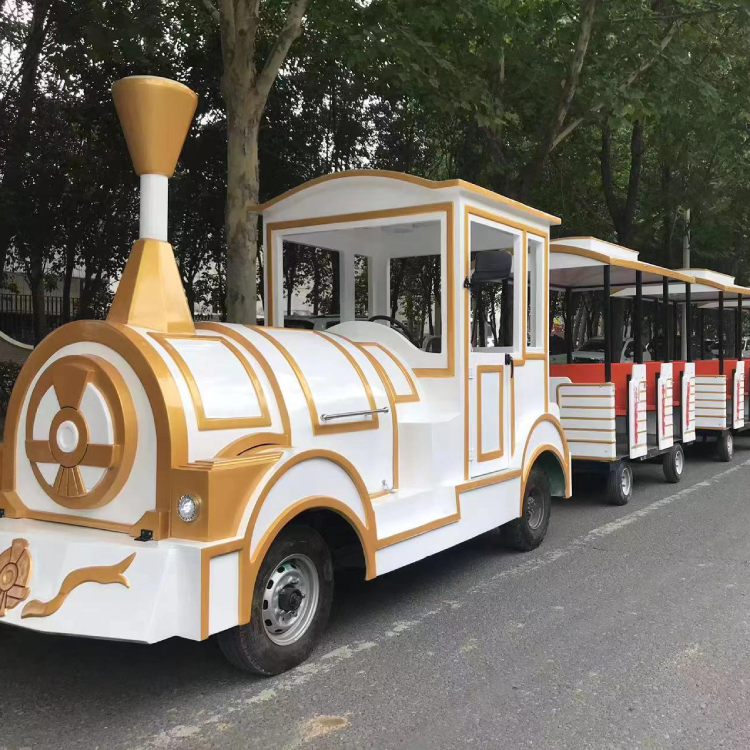
2. The Drivetrain Debate: Why "Standard" Motors Fail in Professional Sightseeing
There is a massive gap between a "backyard" train and industrial-grade Tourist Train Rides. In a commercial setting, the drivetrain faces 10 to 12 hours of constant start-stop cycles.
-
The AC Advantage: We’ve moved away from older DC systems because they simply can't handle the heat buildup of a full 40-passenger load on a hot July afternoon. Modern Tourist Train Rides utilize high-voltage AC brushless motors. They offer a linear torque curve, which means you don't get that "jerking" sensation when pulling away from a stop—something your guests’ coffee (and your gearbox) will thank you for.
-
Duty Cycles: If you’re running a mountain resort, diesel remains king for raw endurance, but for 90% of urban and mall sites, the low maintenance of a lithium-powered AC system is the smarter long-term play for your Opex.
3. Safety Standards: The "Invisible" Engineering of Fail-Safe Couplings and Braking
Safety isn't about a certificate on the wall; it’s about what happens when a sensor fails. Professional Tourist Train Rides must be built to ASTM F24 or EN 13814 standards, and that comes down to redundancy.
-
Braking Logic: You cannot rely on a single hydraulic line. We insist on dual-circuit systems—pneumatic-over-hydraulic. If a line leaks, the secondary system ensures the train doesn't become a multi-ton runaway on a slope.
-
Hitch Integrity: Cheap hitches are the number one failure point in low-end models. Industrial Tourist Train Rides use aviation-grade, fail-safe couplings. If a carriage becomes unhooked, the brakes on that specific carriage should engage automatically. If the manufacturer you're talking to doesn't mention "dead-man" braking, they aren't selling you a professional vehicle.
4. Cabin Ergonomics: Throughput is Won or Lost at the Door
The "dwell time" at a station is the silent killer of park efficiency. If it takes five minutes to load a train, your throughput is halved. When evaluating Tourist Train Rides, look at the door-to-seat ratio. Wide, low-floor entries are essential for fast loading. Furthermore, in today’s market, inclusive design is a non-negotiable. We integrate wheelchair-accessible ramps directly into the chassis. It shouldn't be an "add-on" that feels like an afterthought; it should be part of the core engineering. A train that can’t accommodate everyone is a liability in a modern tourist destination.
5. The Branding Asset: Turning Transit into a Social Media Engine
Let’s be honest: a train is a moving billboard. Whether it’s a 19th-century steam-engine replica or a sleek, futuristic shuttle, the visual "identity" of your Tourist Train Rides should anchor your park’s theme. But "looks" need to be durable. We use automotive-grade finishes because park environments are brutal—UV exposure, salt air, and thousands of sticky hands. At MODERN, we also suggest integrated GPS-triggered audio. As the train passes a specific landmark, the narration triggers automatically. It turns a simple ride into a guided tour, adding perceived value without increasing your staffing costs.
Conclusion: The Total Cost of Ownership (TCO) Reality
Buying Tourist Train Rides based on the lowest initial quote is the fastest way to blow your maintenance budget. A "bargain" train that spends three days a week in the shop is the most expensive asset you can own.
Invest in the engineering—the motors, the hitches, and the braking systems. At MODERN, we build for the operator who understands that reliability is the only way to protect a multi-million dollar park investment.
Online Message
Please leave the message you want to inquiry. We will reply you as soon as possible within 24 hours.